



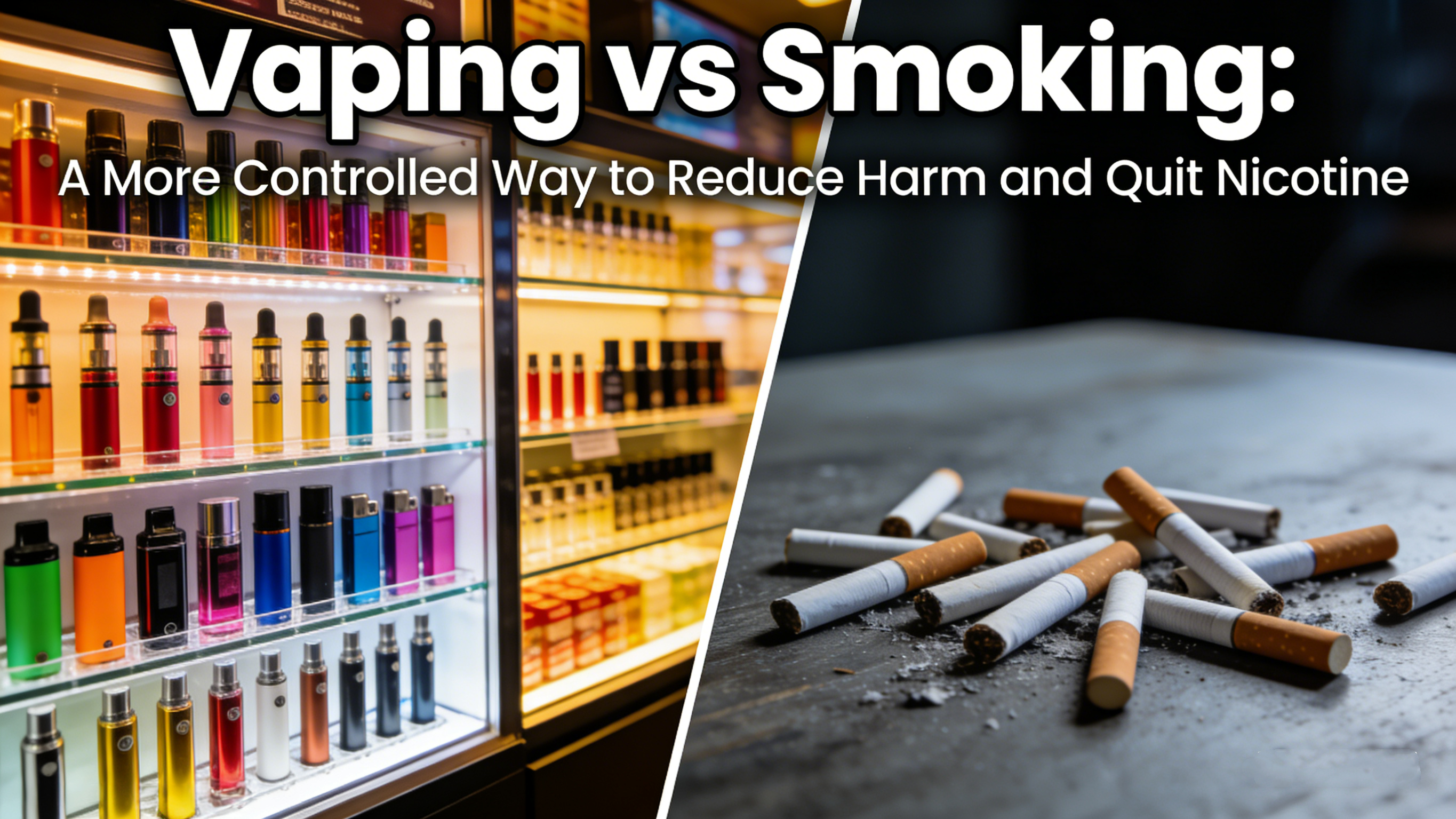
Vaping vs Smoking: A More Controlled Way to Reduce Harm and Quit Nicotine
Is Vaping a Safer Alternative to Smoking?
For millions of smokers across Europe, one question keeps coming up:
Is there a safer alternative to smoking that still satisfies nicotine cravings?
In recent years, vaping has become one of the most discussed options. While it is not risk-free, many users and studies suggest that vaping vs smoking is not an equal comparison—mainly because of how each works at a chemical level.
Burning vs Heating: Why It Matters
Traditional cigarettes rely on combustion.
When tobacco burns, it releases thousands of harmful chemicals, including tar and carbon monoxide—many of which are directly linked to serious health conditions.
Vaping, on the other hand, works by heating e-liquid rather than burning tobacco.
This key difference means:
- No combustion
- Fewer toxic byproducts
- No tar production
That’s why many experts consider vaping a lower-risk alternative to smoking, even though it is not completely harmless.
What’s Inside Vape Liquid?
A common concern among European users is: “What am I actually inhaling?”
Most e-liquids consist of:
- Base liquids (typically over 90% of the formula)
- Flavorings
- Optional nicotine
The base ingredients are widely used in food and even in stage fog machines at concerts and clubs.
While flavorings can vary, vaping offers something traditional cigarettes never did:
control and transparency.
Users can:
- Choose nicotine strength
- Switch flavors
- Even reduce or eliminate nicotine over time
Nicotine Intake: A More Flexible System
One of the biggest differences between vaping and smoking is how nicotine is delivered.
Cigarettes:
- Deliver nicotine quickly and intensely
- Reinforce strong habits (after meals, social settings, stress relief)
- Create fixed behavioral patterns
Vaping:
- Allows gradual nicotine intake
- Doesn’t rely on strict rituals
- Offers adjustable nicotine levels
This flexibility makes vaping particularly useful for people trying to reduce nicotine intake step by step.
Can Vaping Help You Quit Smoking?
Many smokers in Europe are not necessarily looking to quit overnight—they’re looking for a realistic transition.
This is where vaping can play a practical role.
A typical approach looks like this:
- Switch from cigarettes to vaping
- Maintain the habit but reduce harmful exposure
- Gradually lower nicotine strength
- Eventually move to nicotine-free options—or quit completely
This method is often referred to as nicotine tapering, and it’s one of the most common strategies for those trying to quit smoking with vaping.
Real-World Experience: What Users Notice
While experiences vary, many former smokers report:
- Easier breathing
- Less lingering smell
- Improved overall comfort
The key takeaway is not that vaping is “healthy,” but that for many users, it represents a practical harm reduction strategy.
Enjoyment vs Risk: A Balanced Perspective
A common argument is:
“If something isn’t completely safe, should it be avoided entirely?”
The reality is that many everyday products—like sugar, alcohol, or caffeine—carry some level of risk. Yet they are widely accepted when used responsibly.
Vaping fits into a similar category for adults:
a controlled choice rather than a perfect solution.
Final Thoughts: Harm Reduction, Not Perfection
Vaping is not risk-free.
But compared to traditional smoking, it offers:
- Reduced exposure to harmful chemicals
- Greater control over nicotine intake
- A realistic pathway to quitting
For many European smokers, vaping is not the final destination—
it’s a transition tool toward a smoke-free and eventually nicotine-free life.